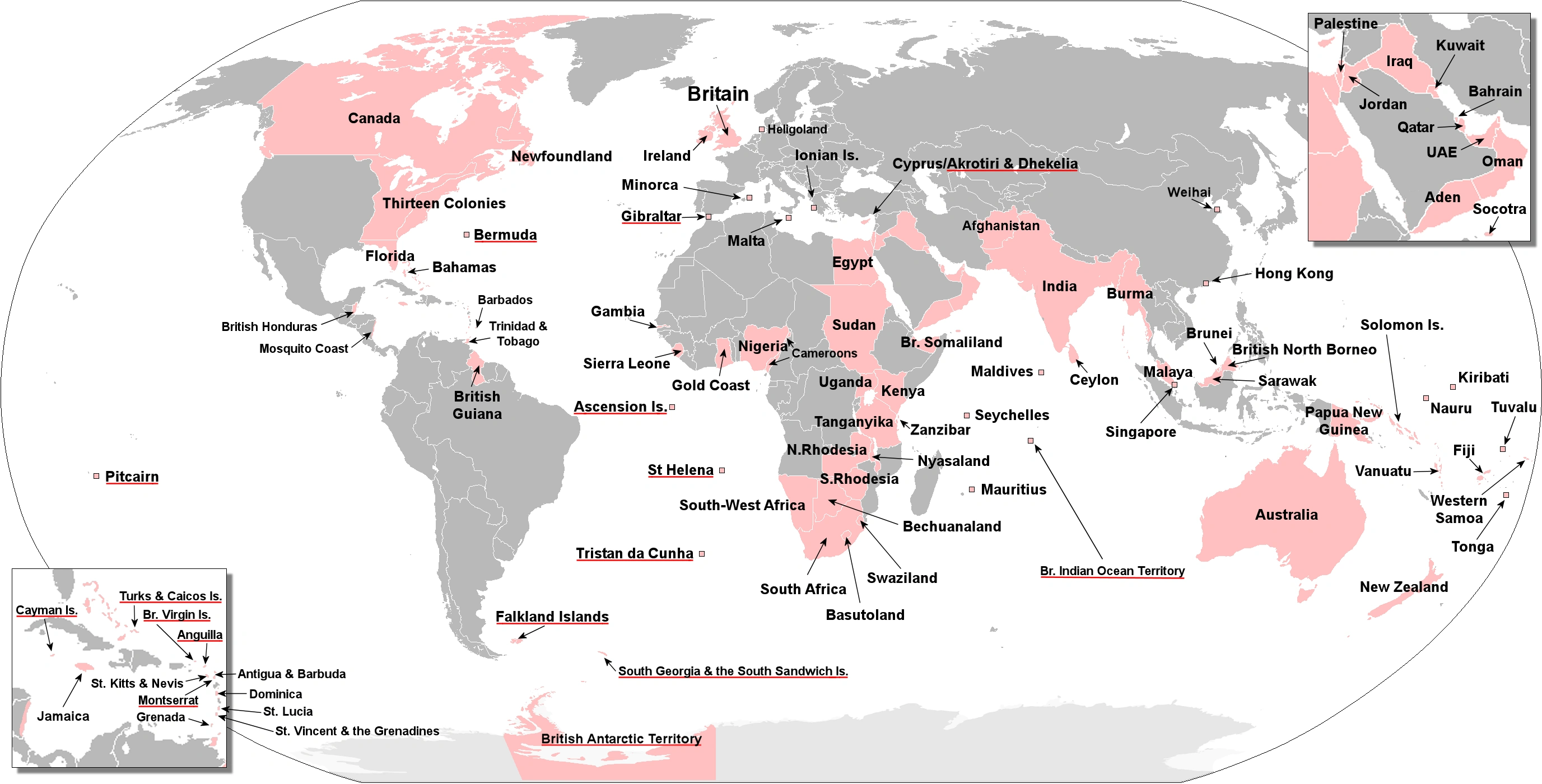
The areas of the world that at one time were part of the British Empire. Current British Overseas Territories have their names underlined in red.
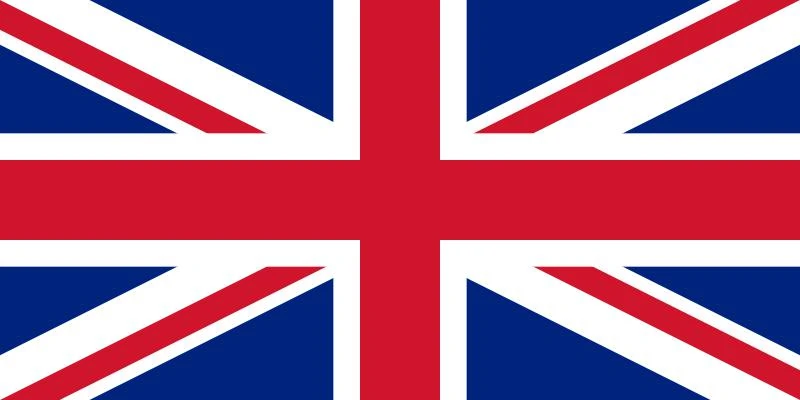
The British Empire comprised the dominions, colonies, protectorates, mandates, and other territories ruled or administered by the United Kingdom, that had originated with the overseas colonies and trading posts established by England in the late 16th and early 17th centuries. At its height it was the largest empire in history and, for over a century, was the foremost global power. By 1922, the British Empire held sway over a population of about 458 million people, one-quarter of the world's population, and covered more than 13,000,000 square miles (33,670,000 km2): approximately a quarter of the Earth's total land area. As a result, its political, linguistic and cultural legacy is widespread. At the peak of its power, it was often said that "the sun never sets on the British Empire" because its span across the globe ensured that at any given hour, at least one of its numerous territories was in daylight.
The British Empire's foundation arose from series of wars in the 17th and 18th centuries with the Netherlands and France left Britain the dominant colonial power in North America and India. Despite the loss of the United States of America in 1783, British attention soon turned towards Africa, Asia and the Pacific Ocean. Following the defeat of Napoleon I of France in 1815, Britain enjoyed a century of effectively unchallenged dominance, and expanded its imperial holdings across the globe. Increasing degrees of autonomy were granted to its white settler colonies, some of which were reclassified as dominions.
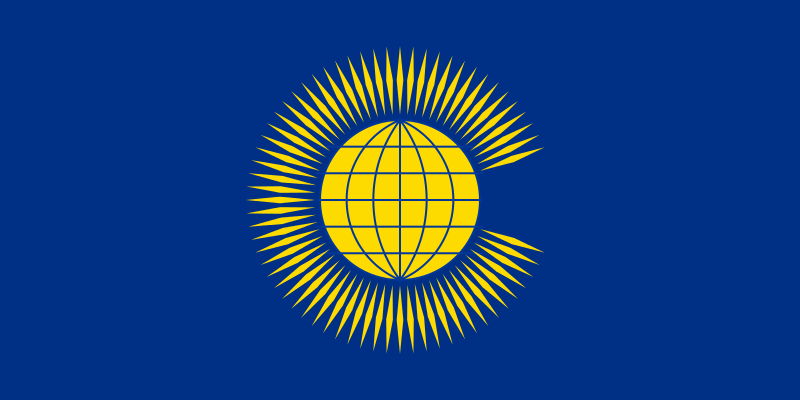
Flag of the Commonwealth of Nations
In the late 19th century, British power was challenged by both Germany and the United States. Although the Empire did reach its peak after World War I, Britain had leaned heavily on its empire in the fight, and it was soon clear how costly the war had been to the overall Empire. During World War II, Britain's possessions in North Africa and South-East Asia were occupied by the Axis. The Empire declined after the war, as decolonisation gained momentum throughout the world. The Empire was effectively dismantled by the end of the 20th century, replaced by a Commonwealth of Nations.
British Empire in Atlantis[]
The British Empire arose from early English explorations and settlements of the continent of Atlantis, starting in 1452. However, it was the discovery of Terranova in 1469 that launched a mad scramble for colonisation in Europe. In many ways, Atlantis was incidental for the next several centuries.
However, after Britain consolidated its control of India and northern Terranova after the mid 18th century global conflict, the Empire itself began its ascendancy. Even the loss of Atlantis to independence was not enough to halt this. The Empire did meet with some losses during the 19th century, as various Terranovan territories achieved independence, although others, such as the Dominion of Ontario, were content to remain part of the Empire.
British Empire in Crosstime Traffic[]
Crosstime Traffic was aware of an alternate in which the American Revolution never took place and North America was a contented colony of the British Empire, which ruled three-quarters of Earth by the late 21st century.
British Empire in Curious Notions[]
In Alternate 3477, the United Kingdom effectively lost all control of its Empire in the early 20th century after losing two wars to the German Empire.
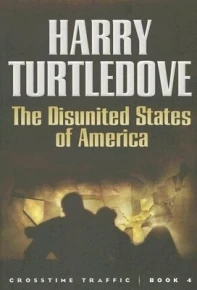
British Empire in The Disunited States of America[]
The British Empire remained one of the world's great powers in the late 21st century.
British Empire in The Hot War[]
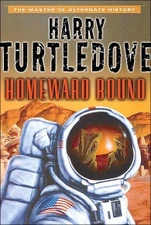
By the outbreak of World War III, it was clear that the British Empire was in decline. The two previous world wars had had Britain on the winning side, but at great cost in treasure and lives. India had broken away and Egypt along with the rest of Africa were restive, indicating imminent break-up.[1]
British Empire in In the Presence of Mine Enemies[]
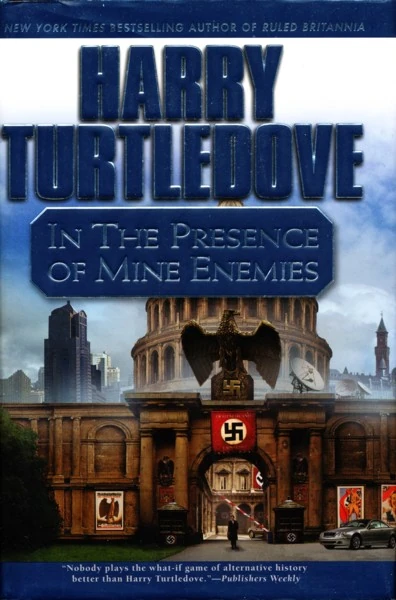
The British Empire was divided up among the Axis after Germany vanquished Britain during World War II. Certain of its African possessions were taken by Italy, but the rest of its African colonies fell to Germany. One exception was South Africa, whose racist policies fit well with German Nazism. Germany also asserted control over India. The rest of Asia, as well as Australia and New Zealand, fell to Japan.
Canada remained independent until it (along with the United States) was defeated at the end of the Third World War.
British Empire in "The Last Article"[]
The British Empire was decapitated when the United Kingdom fell to Germany in 1940. Among the terms of surrender were that all Imperial forces around the world were to lay down arms, though several refused, including the Army of India. Germany finally subdued the last significant division of this force until 1947, when General Claude Auchinleck surrendered to Walther Model.
British Empire in "Last Flight of the Swan of the East"[]
When Britain chose to remain neutral in the Great War, this declaration of neutrality extended to all parts of the British Empire.
British Empire in "News From the Front"[]
Despite the massive scope of its Empire, Britain appeared to be losing World War II by May 1942. In his Little Rock speech, United States Vice President Henry Wallace specifically referenced the British Empire as one of the institutions which Americans should not have to die to defend.[2]
British Empire in "Ready for the Fatherland"[]
Although World War II's European Theatre ended in a stalemate, Sicily was taken from Italy and grafted onto the British Empire, while the Axis retained hegemony over the Continent.
British Empire in Southern Victory[]
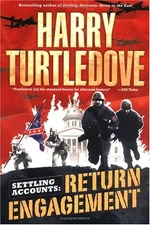
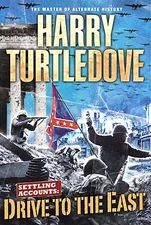
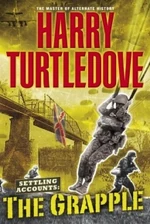
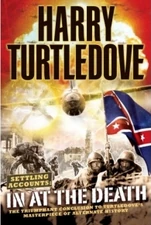
The British Empire was the largest Empire in the world during the 19th century, making Britain a major world power. Their holdings in North America, specifically Canada, allowed Britain to keep the United States in check during the War of Secession and later the Second Mexican War.
By the 20th century, the Empire was at its height. However, too many enemies prevented them from being able to properly defend its territory. With Germany on the European continent, the British had to adopt a defensive strategy in North America, while relying on the Confederacy to do most of the fighting against the Yankees. When the Great War began in 1914, the Empire suffered its first major humiliation with the loss of the Sandwich Islands to a US Naval attack during the opening weeks. To make matters worse, the war in Europe started off badly as both the French and the Russians proved unable to stop the Germans, forcing Britain to divert most of their man power to the continent. Internal problems also arose when Ireland rebelled. By 1917, fighting a multi-front war proved too much for the empire to handle, and after the Confederacy sued for peace, the Empire was forced to seek an armistice for the war in Canada. After Brazil's entry into the war added to the strain of food supplies from Argentina to the mother country, the Empire was forced to seek a full armistice.
In the ensuing peace, the Empire lost Canada, the Dominion of Newfoundland, the Sandwich Islands, and several Caribbean possessions, all ceded to the United States. The whole of Ireland was granted independence through threats of force from the U.S. and Germany. However, the Empire was by no means broken, as Britain was still considered the major power in Africa, India and Australia. In the aftermath of the war, another threat to the empire arose in the form of Japan, when it took control of Indochina, and the Dutch East Indies. In spite of this new rival, the Empire was still strong enough to contest Japan from taking any of her Asian colonies. As the 1930s began and Winston Churchill came to power as Prime Minister, the Empire began to rearm, but at a cost in reduction of strength in the Pacific.
When the Second Great War began in 1941, the Empire declared war not only on Germany, but on the United States as well, as defeating both countries would be the only way the empire would be able to regain all that it had lost. Unfortunately, this proved too big of a task, as both Germany and the United States did not go down as easily as planned, resulting in a grapple. By late 1943 the war in Europe had turned against the Empire, and Japan, sensing weakness, turned on England, defeating them in Asia, taking Malaya and leaving Australia in a panic. In 1944, London, the center of the empire, was destroyed by a German superbomb. Unable to retaliate, Britain was forced to seek an armistice with all its enemies. When peace was declared, the empire was a shadow of its former self.
British Empire in The Two Georges[]
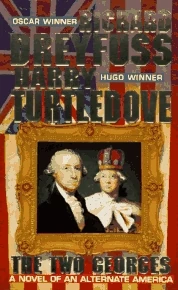
The British Empire's ascendancy to global superpower status began in the 18th century, shortly after the Seven Years' War, when Britain found itself in control of much of North America. Crisis seemed to threaten in the 1760s when certain colonies began agitating against Britain's efforts to more directly rule North America. However, this crisis was averted when a colonial delegation, led by George Washington, visited the Court of St. James, and, after some negotiations, firmly pledged the colonies' loyalty to King George III.
Over the course of the following two-and-a-half centuries, the British Empire grew and expanded steadily, bringing more and more nations and peoples into its fold. By 1995, it had already been recognized for decades as one of the most powerful nations in the world. The British Empire of 1995 encompassed the North American Union, Gibraltar, Malta and Cyprus and large swaths of Africa, India, Australia and New Zealand, while the Ottoman Empire, China and Hawaii all had become protectorates. Britain maintained a toe-hold in South America, but that continent was dominated by the Franco-Spanish Holy Alliance, as was the largest part of Africa. Britain's other main political rival was the Russian Empire. Only the Holy Alliance and the Russian Empire- themselves massive, globe-spanning empires- could even hope to match the British Empire's political, economic, and military might. None could surpass it.
Out of all of its many colonies, protectorates and possessions, the one the British Empire treasured most was the one that had contributed so much to its rise to unsurpassed prosperity and greatness: the North American Union. There existed a great deal of mutual respect and trust between Britain and the NAU. The NAU was permitted to engage in foreign relations with a significant degree of independence, but, out of respect for the British Crown, the North Americans always aligned their positions and policies closely with those of Britain, and considered themselves fully part of the Empire. The famous painting symbolizing this union, "The Two Georges", depicting George III and George Washington reaching the compromise that secured the American colonists' loyalty to Britain, was greatly admired and prized both by citizens of the British Isles and the North American Union.
An alternate history novel entitled The United Colonies Triumphant, published in the NAU, depicted a very different history in which Germany united, became a major world power and fought a great war with other European powers. In this fictional war, the United Colonies (an independent version of the NAU) came to the British Empire's aid, saving it from Germany. It was considered an entertaining but rather far-fetched and improbable speculation. Colonel Thomas Bushell of the Royal American Mounted Police considered the idea of Germany being united under a single malign ruler to be absurd; since the early Middle Ages Germany had been divided into numerous mutually-antagonistic principalities, and no one had ever seriously tried to unite them. Furthermore, Bushell regarded the idea of Britain needing any form of rescue by the Colonies to be foolish, as he firmly believed that even without the NAU, the British Empire would still have been the mightiest entity in the world.
British Empire in Worldwar[]
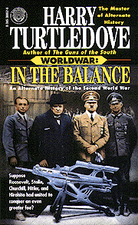
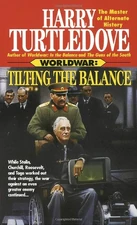
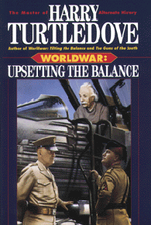
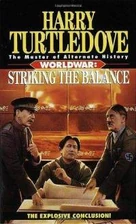
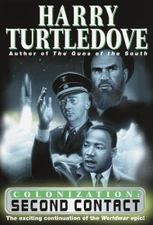
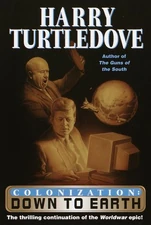
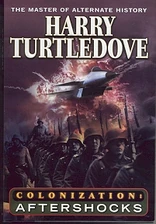
In the early 20th century, the British Empire was the largest empire on Earth, spanning one quarter of the globe. However, by mid 1942, the empire was under attack, with not only the Home Islands being bombed, but North Africa and Asia being threatened, where it had lost control of Hong Kong, Malaya, Singapore and Burma.
When the Race landed in June 1942, they quickly overwhelmed and dominated most of the empire, with the exception of Canada, Australia, New Zealand, the Middle East, western India, and some island holdings. Throughout most of the war, the empire was only able to harass the Race, while the skies of England was the biggest theatre of operation. In 1943, the Race invaded England in an attempt to destroy the empire once and for all, but it proved difficult and ended in failure. In 1944, the war turned against the empire, as the Race launched an offensive that drove the British out of the Middle East with the help of Jewish Rebels. Shortly there after, the British were defeated in western India. Australia also fell, when the Race destroyed their major cities of Sydney and Melbourne with explosive-metal bombs. At the Peace of Cairo, the Race refused to return any overseas territory to Britain. Only Canada and New Zealand remained, the former because it was too cold for the Race, and because the United States demanded it; the latter because it was too small for the Race to have worried about. Similarly the Japanese refused to return the areas they had conquered in Southeast Asia and the Pacific, including Singapore, Borneo, Papua New Guinea and the Solomon Islands.
The Soviet delegates at the Cairo Conference were pleased at the demise of the British Empire, even if it had been done at the hands of the Race and not by a revolution of the colonized people, which had been a Soviet aim previous to the Race's invasion.
References[]
- ↑ Fallout, pg. 79, HC.
- ↑ Atlantis and Other Places, pg. 110.
| ||||||||||||||||||||||||||||
| |||||||||||||||||||
| ||||||||||||||||
| |||||||||||||||||||||
| ||||||||||||||||
| ||||||||
| |||||||||||
| ||||||||||||||
| |||||||||||||||||||||||||
| |||||||||||||||||||||||||